Caribbean
High-level information on Article 6 cooperation and activities for the Caribbean region.
Last updated 31 May 2026
3 agreements involving 2 different countries.

0 ITMOs transactions involving 0 different countries.
2 activities involving 1 different countries were approved (including projects and programmes already registered).
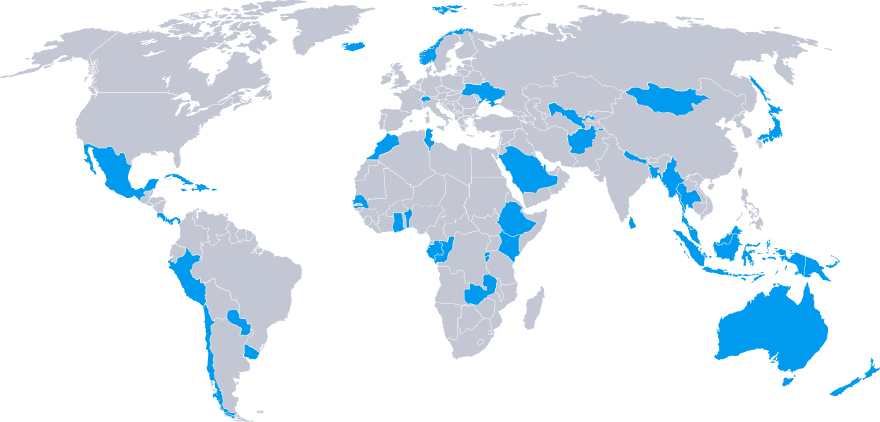

High-level overview of Article 6 cooperation and activities across Caribbean.
Caribbean countries’ involvement in Article 6.2 cooperations
Agreements
Countries in Caribbean as host / buyer
Cooperative approaches
Countries in Caribbean as host / buyer
Transitioning CDM activities and newly proposed projects and programmes with prior consideration notifications in Caribbean. Each bar shows the activities currently at that stage of the activity cycle; the pipeline below shows cumulative progression across stages.
Lorem ipsum dolor sit amet, consectetur adipiscing elit.
Activities and how they address emissions across sectors in Caribbean.
 Activity type
Active transport/mobility
Afforestation and tree planting
Biochar
Bioenergy
Building efficiency
Carbon Removal and Storage
Chemical processes
Cleaner cooking
Efficient appliances
Electric vehicles
Energy storage
Forest management and avoided deforestation
Fossil fuel/feedstock switch
Freight transport
Fugitive emissions
Geothermal
Green hydrogen & green ammonia
Grid/energy supply efficiency
Hydropower
Improved cropland management
Industrial efficiency
Landfill gas
Livestock management
Mixed renewables
Public transport
Reforestation and ecosystem restoration
Solar energy
Source Carbon Capture
Space heating and cooling
Waste energy recovery
Waste management
Wastewater treatment
Water purification and water supply
Wind
Activity type
Active transport/mobility
Afforestation and tree planting
Biochar
Bioenergy
Building efficiency
Carbon Removal and Storage
Chemical processes
Cleaner cooking
Efficient appliances
Electric vehicles
Energy storage
Forest management and avoided deforestation
Fossil fuel/feedstock switch
Freight transport
Fugitive emissions
Geothermal
Green hydrogen & green ammonia
Grid/energy supply efficiency
Hydropower
Improved cropland management
Industrial efficiency
Landfill gas
Livestock management
Mixed renewables
Public transport
Reforestation and ecosystem restoration
Solar energy
Source Carbon Capture
Space heating and cooling
Waste energy recovery
Waste management
Wastewater treatment
Water purification and water supply
Wind

Article 6 cooperation should help to achieve the goals of the Paris Agreement. To hold the increase in the global average temperature to well below 2 °C above pre-industrial levels and pursuing efforts to limit the temperature increase to 1.5°C above pre-industrial levels, international transfers must be anchored in ambitious, economy-wide nationally determined commitments (Article 2 para. 1(a) of the Paris Agreement).
The activities implemented under Article 6 shall promote sustainable development. Activities can come with significant positive impacts for local, national and global Sustainable Development Goals (SDGs) – but also significant risks to people and environment.
As outlined in countries’ Participation Requirements for the PACM
The Article 6.4 sustainable development tool aims to ensure that PACM activities “do no harm” and contribute to achieving the Sustainable Development Goals. Project proponents are required to identify potential impacts - both positive and negative - and show how social and environmental risks are addressed.
Activity type
Active transport/mobility
Afforestation and tree planting
Biochar
Bioenergy
Building efficiency
Carbon Removal and Storage
Chemical processes
Cleaner cooking
Efficient appliances
Electric vehicles
Energy storage
Forest management and avoided deforestation
Fossil fuel/feedstock switch
Freight transport
Fugitive emissions
Geothermal
Green hydrogen & green ammonia
Grid/energy supply efficiency
Hydropower
Improved cropland management
Industrial efficiency
Landfill gas
Livestock management
Mixed renewables
Public transport
Reforestation and ecosystem restoration
Solar energy
Source Carbon Capture
Space heating and cooling
Waste energy recovery
Waste management
Wastewater treatment
Water purification and water supply
Wind
In the Article 6.4 SD Tool, activity participants are required to identify and assess the potential positive and negative direct impacts of their PACM activities on the SD of the host Party(ies) by considering the host Party(ies) SD objectives and priorities and the SDGs.
TOTAL ACROSS ALL SDG'S
SDG'S LIST
Each participating Party is required to submit an Article 6.2 initial report that contains comprehensive information related to how the cooperative approach will minimize and, where possible, avoid negative environmental, economic and social impacts, and how it is consistent with the sustainable development objectives of the Party, noting national prerogatives.
Projects and initiatives to build Article 6 capacities that involve countries in Caribbean.
The Carbon Transaction Facility (CTF) is GGGI’s solution to the challenges that face countries seeking to…


ICAT provides countries with tailored support and practical tools and methodologies to build the robust…


The project is aimed at supporting developing countries in the transition to the Enhanced Transparency…