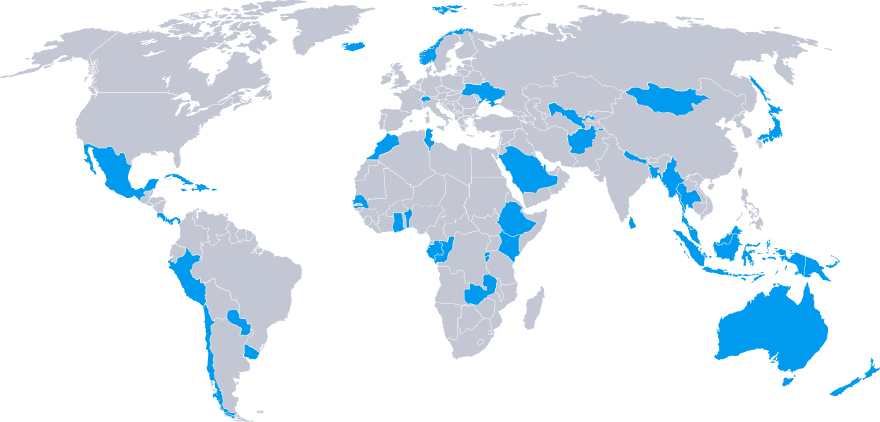
High-level information on Article 6 cooperation and activities for the Europe & Central Asia region.

Last updated 4 December 2025
Total Emissions 10.1 billion tCO2e
Emissions per capita 7.41 tCO2e per person
Total number of:
42
View list
Countries with bilateral agreements

42 agreements involving 13 different countries.

13.6 thousand
View list
Countries that transferred or received ITMOs

13.6 thousand ITMOs transactions involving 1 different countries.

Countries
ITMOs
Switzerland
13.6 thousand
1
View list
Countries with approved PACM activities

1 activities involving 1 different countries.

Countries
Activities

Article 6.2 | Cooperative approaches

Europe & Central Asia’s involvement in Article 6.2 cooperations.


Agreements

Countries in Europe & Central Asia as host / buyer


Cooperative approaches

Countries in Europe & Central Asia as host / buyer


Impact over time

Countries in Europe & Central Asia as host / buyer

Learn more

Article 6.4 | Paris Agreement crediting mechanism (PACM)

Transitioning CDM activities and newly proposed projects and programmes with prior consideration notifications across Europe & Central Asia.

National Arrangements

Lorem ipsum dolor sit amet, consectetur adipiscing elit.

FILTER BY

Sector / Activity type

Activities and how they address emissions across sectors in Europe & Central Asia.

Energy
Buildings
Transport
Industry
AFOLU
Waste


INDIVIDUAL ACTIVITIES
All activities by project category and expected annual mitigation.
Search

National targets

Article 6 cooperation should help to achieve the goals of the Paris Agreement. To limit global temperature increase to 1.5 degrees, transfers between countries need to happen in the context of comprehensive and ambitious national commitments.

Nationally Determined Contribution (NDC)
GHG coverage
Additional goals Net Zero Tracker
Long term strategies

Sustainable development

The impact from activities implemented under Article 6 is not limited to addressing climate change. Projects can come with significant co-benefits across other sustainability dimensions – but also significant risks to people and environment.

Intended Contribution to Sustainable Development Goals

As outlined in countries’ Participation Requirements for the Paris Agreement Crediting Mechanism.


Sustainable development tool

The Article 6.4 sustainable development tool aims to ensure that PACM activities "do no harm" and contribute to achieving the Sustainable Development Goals. Project proponents are required to identify potential impacts - both positive and negative - and show how social and environmental risks are addressed.


Sustainable development impacts

The Article 6.4 sustainable development tool aims to ensure that PACM activities “do no harm” and contribute to achieving the Sustainable Development Goals. Project proponents are required to identify potential impacts - both positive and negative - and show how social and environmental risks are addressed.

TOTAL ACROSS ALL SDG'S

No impacts identified
Positive
Negative
Negative and positive

SDG'S LIST

Negative Impacts
Positive Impacts

IDENTIFIED RISKS

Sustainable development in cooperative approaches

Initiatives aiming to strengthen Article 6 knowledge and capabilities that involve countries in the Europe & Central Asia.

Capacity building

Projects and initiatives to build Article 6 capacities that involve countries in Europe & Central Asia.

Projects & Initiatives
From 2022 — Until 2027
Supporting Preparedness for Article 6 Cooperation (SPAR6C)
Implemented in:

Colombia Zambia Pakistan Thailand

Funded by:

Germany

The five-year project aims to enhance readiness of Colombia, Pakistan, Thailand and Zambia to participate in the international carbon market under Article 6 of the Paris Agreement. To achieve this, the project aims to increase private sector engagement in NDC implementation and to support raising climate ambition in partner countries.

Read more
From 2023 — Until 2026
Integrated Assessment for Article 6 (IAA6)
Implemented in:

Peru United Republic of Tanzania Sri Lanka

Funded by:

European Union

IAA6 supports countries in building capacity for the strategic use of cooperation under Article 6, enabling increased climate ambition and promoting sustainable development. By developing and piloting a systemic framework (IAA6 Approach), the project helps countries define 1.5°-compatible pathways and the role cooperative approaches could play in achieving them.

Read more
From 2018 — Until 2026
Article 6 Support Facility (A6SF)
Implemented in:

Indonesia Pakistan Mongolia Philippines Thailand Timor-Leste Palau

Funded by:

Sweden Germany

The Support Facility provides capacity building and technical support to developing member countries (DMCs) to help them to identify, develop and test mitigation actions under the framework of Article 6 of the Paris Agreement.

Read more
From 2021 — ongoing
Article 6 Transfer Readiness Project
Implemented in:

Georgia Ghana Peru Senegal Thailand

Funded by:

Switzerland

Desk assessment of countries’ level of readiness for international transfers under Art. 6 of the Paris Agreement. This project utilized Article 6 and international transfer readiness assessment protocols developed by Neyen to comprehensively analyze the level of readiness of 5 countries for this purpose. The project additionally creates insight into the capacity building needs and other areas (institutional arrangements, regulatory framework, technical support) that may be needed in the participating countries with the final objective of facilitating transactions under Article 6.2 of the Paris Agreement.

Read more
From 2016 — ongoing
Carbon Market Platform
Implemented in:

Canada Japan United Kingdom of Great Britain and Northern Ireland European Union France Germany Italy

The Carbon Market Platform (CMP), launched in 2015 under Germany's G7 presidency, brings together a diverse group of countries and organisations with the aim of strengthening international co-operation on developing effective, sustainable and ambitious carbon pricing approaches.

Read more
From 2021 — ongoing
Carbon Payment for Development (CP4D)
Implemented in:

Ghana Georgia Malawi Morocco Peru Switzerland Sweden Vanuatu Ukraine

Established in 2021, UNDP's Carbon Payments for Development Facility is a powerful catalyst for innovative public-private partnerships that curb carbon emissions and advance the Sustainable Development Goals (SDGs). Guided by Article 6 of the Paris Agreement, this framework aligns with the global commitment to combat climate change.

Read more
From 2024 — ongoing
Carbon Transaction Facility
Implemented in:

Dominican Republic Morocco Paraguay Senegal Côte d’Ivoire Rwanda Sri Lanka Jordan Nepal Indonesia Switzerland

Funded by:

New Zealand Norway Sweden

The Carbon Transaction Facility (CTF) is GGGI’s solution to the challenges that face countries seeking to participate in cooperative approaches under Article 6, and to scaling up international carbon trading. The CTF, launched in October 2024, aims to accelerate global GHG emission reductions by catalyzing carbon trading under Article 6. The CTF structure has two main pillars: the Article 6 Readiness Facility on one side, and a number of multiple ITMO-purchasing carbon funds on the other. The Article 6 Readiness Facility is a multi-donor fund improving host country readiness through technical assistance and capacity building. The Carbon Funds, on the other hand, are a series of individual funds for initiating Article 6 carbon transactions and purchasing Article 6 carbon credits (ITMOs).

Read more
From 2021 — Until 2026
Cooling Program for Southern Africa (CooPSA)
Implemented in:

Namibia South Africa Eswatini Botswana

Funded by:

Germany

The aim of the programme is to prepare and implement a climate change mitigation programme to introduce energy-efficient and F-gas free ACs in the region of the Southern African Development Community (SADC), specifically in Botswana, Eswatini, Namibia and South Africa. Therefore, framework conditions to pilot market-based approaches according to Article 6 of the Paris Agreement will be created. The programme will work on political, contractual, regulatory, technological, and economic framework conditions.

Read more
From 2022 — Until 2026
Initiative for Climate Action Transparency (ICAT)
Implemented in:

Argentina Barbados Belize Botswana Brazil Burundi Canada China Colombia Costa Rica Cuba Dominican Republic Ethiopia Fiji Gambia Guinea India Indonesia Jamaica Japan Jordan Guyana Kazakhstan Kenya Kyrgyzstan Lao People's Democratic Republic Malawi Malaysia Maldives Mexico Republic of Moldova Mongolia Montenegro Morocco Myanmar Namibia Nigeria Norway Oman Pakistan Palau Papua New Guinea Peru Philippines Republic of Korea Rwanda Saudi Arabia Senegal Singapore Sri Lanka Sudan Suriname Sweden Switzerland Togo Tunisia Türkiye Uganda United Arab Emirates United States of America Uzbekistan Vanuatu Zambia Zimbabwe

Funded by:

Japan Sweden

ICAT provides countries with tailored support and practical tools and methodologies to build the robust transparency frameworks needed for effective climate action in sync with national development priorities. ICAT provides countries with tailored support and practical tools and methodologies to build the robust transparency frameworks needed for effective climate action in sync with national development priorities.

Read more
From 2019 — ongoing
Mobilizing Article 6 Trading Structures (MATS)
Implemented in:

Cambodia Lao People's Democratic Republic Nepal

Funded by:

Sweden

The MATS project is aimed at establishing Article 6 Activities under the Paris Agreement. The objective of this joint collaboration is to catalyze international trading of mitigation outcomes in support of the increased climate ambitions needed under the Paris Agreement.

Read more
From 2023 — Until 2025
NDC Assist II Project - Article 6 Capacity Building Project Component
Implemented in:

Peru South Africa Rwanda

Funded by:

Germany

The project component “Article 6 Capacity Building” of the global project NDC Assist II aims to strengthen the strategic capacities for the use of international market mechanisms under Article 6 of the Paris Agreement in Rwanda, South Africa and Peru. Line ministries and downstream institutions are provided with strategic and methodological advice for strengthening the national policy and institutional framework to support decision-making processes on the use of Article 6.

Read more
From 2018 — ongoing
Nordic Initiative for Cooperative Approaches (NICA)
Funded by:

Denmark Finland Iceland Norway Sweden

The Nordic Initiative for Cooperative Approaches (NICA) supports the implementation of international market-based collaboration under Article 6 of the Paris Agreement. It also monitors developments in the Voluntary Carbon Markets and their interaction with Paris Agreement mechanisms.

Read more
From 2025 — ongoing
Norwegian Global Emission Reduction Initiative (NOGER)
Implemented in:

Benin Jordan Senegal Zambia

Funded by:

Norway

The Norwegian Global Emission Reduction (NOGER) Initiative directly contributes to emission cuts and green transitions in developing countries. It utilizes the Paris Agreement Article 6 framework for cooperation on climate goals. It aims to increase countries’ climate ambitions, and the cooperation can mobilize large private, green investments.

Read more
From 2022 — ongoing
Online Course, Operationalizing Article 6.2 of the Paris Agreement: Achieving ambitious climate action through cooperative approaches
Funded by:

Sweden Switzerland

This self-paced course presents a comprehensive overview of Paris Agreement Article 6.2 implementation requirements and the main building blocks for an Article 6.2 Framework in your country. It will help position your country as a trusted partner in cooperative approaches with bilateral partners that can advance action towards achieving each nation’s NDCs and higher ambition on climate action.

Read more
From 2017 — ongoing
Sustainable Development Initiative (SDI) for Article 6
Funded by:

Sweden Norway Switzerland Belgium Liechtenstein Finland Germany

The Sustainable Development Initiative (SDI) explores Party and other stakeholder views on options to assist with the implementation of sustainable development provisions in Article 6 of the Paris Agreement to the UNFCCC. Based on technical work, research and analysis, the SDI regularly presents options for guidance, rules, modalities and procedures to operationalize the Article 6 sustainable development (SD) provisions.

Read more
From 2016 — ongoing
Capacity-Building Initiative for Transparency - Global Support Program (CBIT-GSP)
Implemented in:

Afghanistan Albania Algeria Andorra Angola Antigua and Barbuda Argentina Armenia Azerbaijan Bahamas Bahrain Bangladesh Barbados Belize Benin Bhutan Bolivia (Plurinational State of) Bosnia and Herzegovina Botswana Brazil Brunei Darussalam Burkina Faso Burundi Cabo Verde Cambodia Cameroon Central African Republic Chad Chile China Colombia Comoros Congo Democratic Republic of the Congo Cook Islands Costa Rica Côte d’Ivoire Cuba Djibouti Dominica Dominican Republic Ecuador Egypt El Salvador Equatorial Guinea Eritrea Eswatini Ethiopia Fiji Gabon Gambia Georgia Ghana Grenada Guatemala Guinea Guinea-Bissau Guyana Haiti Honduras India Indonesia Iran (Islamic Republic of) Iraq Israel Jamaica Jordan Kazakhstan Kenya Kiribati Kuwait Kyrgyzstan Lao People's Democratic Republic Lebanon Lesotho Liberia Libya Madagascar Malawi Malaysia Maldives Mali Marshall Islands Mauritania Mauritius Mexico Micronesia (Federated States of) Republic of Moldova Mongolia Montenegro Morocco Mozambique Myanmar Namibia Nauru Nepal Nicaragua Niger Nigeria Niue North Macedonia Oman Pakistan Palau State of Palestine Panama Papua New Guinea Paraguay Peru Philippines Portugal Qatar Rwanda Saint Kitts and Nevis Saint Lucia Saint Vincent and the Grenadines Samoa Sao Tome and Principe Saudi Arabia Senegal Serbia Seychelles Sierra Leone Singapore Solomon Islands Somalia South Africa South Sudan Sri Lanka Sudan Suriname Syrian Arab Republic Tajikistan Thailand Timor-Leste Togo Tonga Trinidad and Tobago Tunisia Türkiye Turkmenistan Tuvalu Uganda United Arab Emirates United Republic of Tanzania Uruguay Uzbekistan Vanuatu Venezuela (Bolivarian Republic of) Viet Nam Yemen Zambia Zimbabwe

The project is aimed at supporting developing countries in the transition to the Enhanced Transparency Framework (ETF) and its Biennial Transparency Reports under the Paris Agreement. It also offers various other support to countries, such as the quality review of country's transparency reports, the provision of a dedicated gender toolkit (forthcoming), global meetings, webinars and knowledge products

Read more
From 2017 — ongoing
West African Alliance on Carbon Markets and Climate Finance
Implemented in:

Benin Burkina Faso Cabo Verde Côte d’Ivoire Ghana Guinea Guinea-Bissau Liberia Mali Mauritania Niger Nigeria Senegal Sierra Leone Gambia Togo

Funded by:

Germany United Kingdom of Great Britain and Northern Ireland

Alliance aims to enhance the position of West African countries in international carbon markets, benefit from technology transfers, and access result-based climate finance for NDC implementation.

Read more
From 2019 — ongoing
Eastern Africa Alliance on Carbon Markets and Climate Finance (EEA)
Implemented in:

Ethiopia Kenya Rwanda Sudan United Republic of Tanzania Uganda

Funded by:

Burundi Germany

The Alliance is focused on bringing member states together with a common goal of delivering an understanding of carbon markets and climate financing

Read more
From 2021 — Until 2025
Urban Climate Action: Pilot Projects under Article 6 of the Paris Agreement in Indonesia and Thailand
Implemented in:

Indonesia Thailand

Funded by:

Germany

The project develops pragmatic approaches for the implementation of activities corresponding to the article 6 of the Paris Agreement in cities." "The expected outcome of the project is to have at least one pilot city in each country that is able to generate emission certificates according to Article 6.

From 2021 — ongoing
Article 6 Early-Mover Programme
Funded by:

Germany

Gold Standard created an Early Mover Programme for project developers, governments and other interested users of Article 6. The programme offered a dedicated helpdesk to respond to questions, practical support including assistance with interactions between parties and opportunities for peer-to-peer exchange and knowledge sharing through channels such as the Article 6 Webinar Series.

Read more
From 2021 — ongoing
Partnership for Market Implementation (successor of Partnership for Market Readiness)
Implemented in:

Bangladesh Botswana Azerbaijan Chile China Colombia Guinea Indonesia Kazakhstan Malaysia Mexico Montenegro Pakistan Belize Bhutan Brazil Cambodia Senegal Egypt Türkiye Ukraine India Republic of Moldova Mongolia Namibia Nepal Papua New Guinea Philippines South Africa United Republic of Tanzania Thailand Uzbekistan Viet Nam

Funded by:

Australia Canada Finland Germany European Union Japan Norway Switzerland United Kingdom of Great Britain and Northern Ireland Spain Sweden

PMI assists countries to design, pilot, and implement pricing instruments aligned with their development priorities. A 10-year program with a capitalization target of US$250 million, the Partnership brings an ambitious and long-term vision for the viability of carbon markets to its support for programs and policies -- across jurisdictions and sectors -- that introduce a strong price signal on carbon emissions and contribute to the Paris Agreement goal of limiting temperature rise to 1.5°C

Read more
From 2020 — ongoing
Climate Market Club
Implemented in:

Bangladesh Bhutan Chile Ghana Japan Peru Rwanda Senegal Singapore Sweden Switzerland

The Club is a group of national governments that jointly develop modalities for piloting activities under Article 6.2 of the Paris Agreement. o date, representatives from eleven countries have already confirmed participation in the Club: Bangladesh, Bhutan, Chile, Ghana, Japan, Peru, Rwanda, Senegal, Singapore, Sweden, and Switzerland. Participation in the Club is voluntary and non-exclusive.

Read more